

- Monday - Friday: 9:00 - 19:00
- info@danieldujaxco.com
- +27781868423
- 199 Loop Street, Cape Town, 7441, South Africa
©2025 Daniel Dujaxco All Rights Reserved - Designed by Selus Tech Ltd
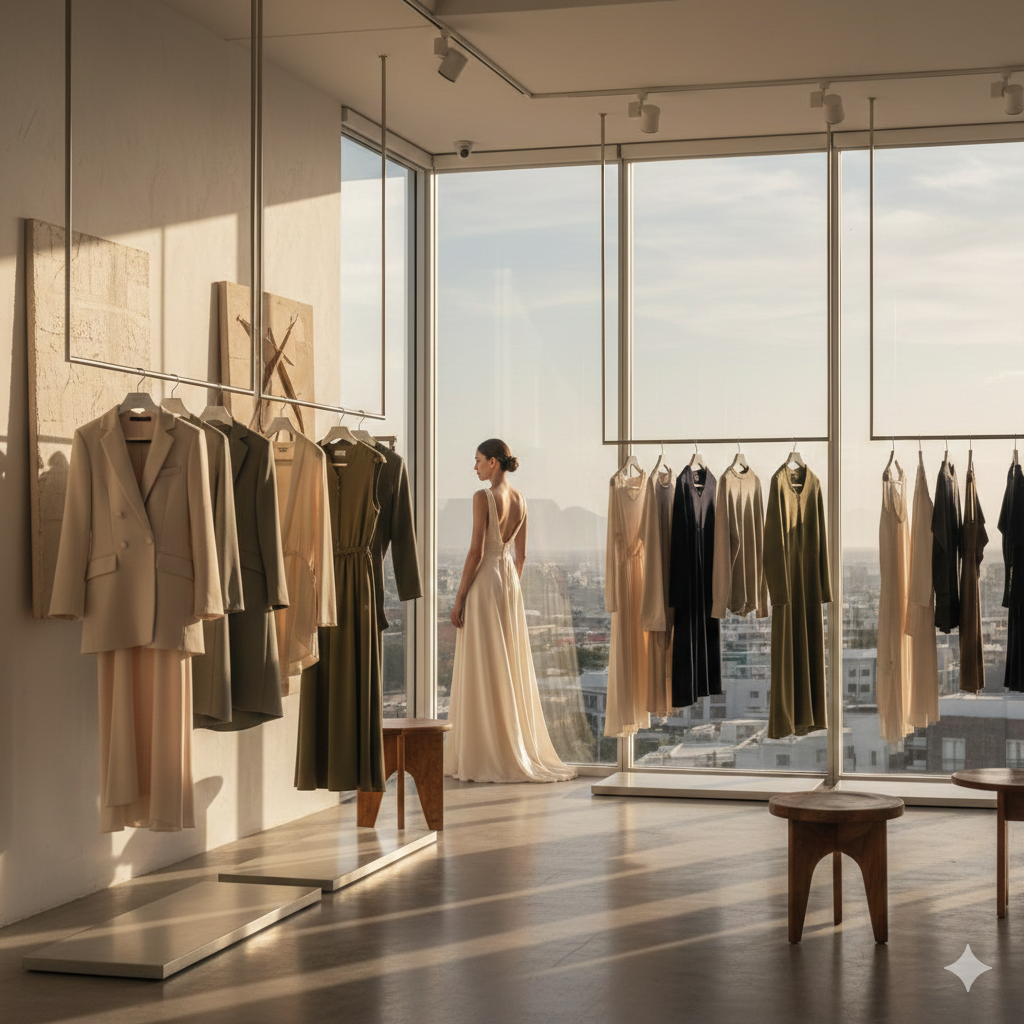
Luxury fashion Cape Town has a very specific rhythm. It’s quieter than the runway cities, less logo-driven, and often more personal. People here notice how a garment moves before they notice what it “signals.” They care about ease, craftsmanship, and restraint. That local mindset changes what “luxury” means, how it’s made, and how you should buy it.
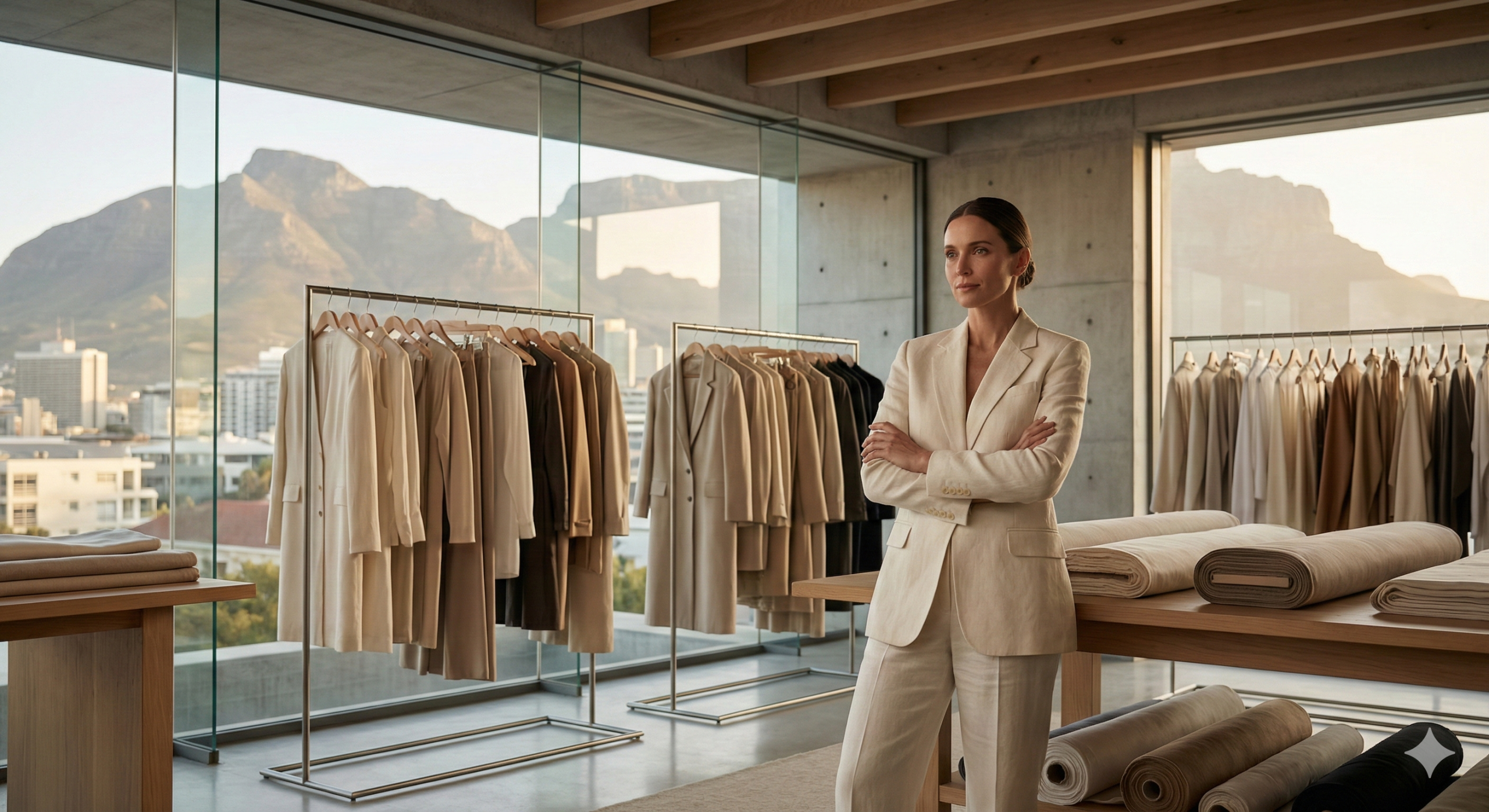
Luxury, in the most useful sense, is not a price tag. It’s a standard of design, materials, construction, and finishing that holds up under real life. In Cape Town, luxury also carries a practical layer because the city’s lifestyle demands it. A piece needs to work for long lunches, quick meetings, travel days, and events that move from afternoon light to evening candle glow without feeling “costume.”
When you define luxury through outcomes, the definition becomes clear:
Luxury materials are chosen for how they behave over time, not how they look on day one.
Luxury construction is built to keep shape and comfort after repeated wears.
Luxury fit respects the body’s movement, not only the mirror snapshot.
Luxury finishing is where the garment proves itself. Seam work, edge control, lining choices, and button placement matter.
That’s the baseline. It’s also why two items can look similar on a hanger and feel completely different on the body.

Cape Town’s environment shapes wardrobes in a way people underestimate until they’ve lived it. The light is sharp and honest. The weather can change quickly. Social plans are fluid. You might dress for a breezy coastal afternoon, then end up indoors with warm lighting and a more formal mood.
That makes versatility one of the local hallmarks of luxury. It’s not about owning a separate outfit for every scenario. It’s about owning fewer pieces that hold their own across settings.
This is also where Cape Town designer clothing stands out. Many local luxury pieces are designed with:
Layer-friendly silhouettes that adjust to temperature changes
Fabric weights that breathe while still draping well
Color palettes that read clean in natural daylight and indoor lighting
Refined minimalism, where the cut does the talking

It’s tempting to judge Cape Town luxury by Paris or Milan rules. That comparison misses what’s special here.
In the big fashion capitals, luxury can be driven by legacy houses, marketing gravity, and recognizable codes. Cape Town luxury tends to be more “craft-forward.” The designer’s hand is closer to the garment, and the customer’s experience is more direct. You’re more likely to discuss fit preferences, fabric behavior, and finishing options, rather than chase a seasonal trend.
This difference shows up in buying behavior too. People who shop premium fashion boutiques Cape Town often do it with a practical question in mind: “Will I wear this for years, and will it still look right when tastes shift?”
That mindset usually leads to better purchases.
Cape Town’s luxury scene has matured through a mix of global exposure and local refinement. More people travel. More clients understand tailoring. More buyers can tell the difference between “expensive” and “well made.”
At the same time, there’s a renewed appreciation for craftsmanship. The conversations have moved beyond labels and into specifics: lapel shape, shoulder structure, seam stability, fabric origin, and finishing standards.
This evolution also connects to luxury tailoring South Africa more broadly. Tailoring has become less about stiffness and more about intelligent structure. A well-tailored jacket can feel light and still read polished because the internal build is doing its job quietly.
If you only remember a few principles, make them these:
Proportion is luxury. A garment looks expensive when the balance is right for the wearer.
Comfort is not optional. Real luxury should feel better at hour six than at minute one.
Finishing is the truth-teller. Stitching, lining, and edge work reveal the maker’s standard.
Design should serve a life. The most “luxury” piece is often the one that fits your actual week.
This is the kind of thinking that defines designers who build long-term wardrobes. It’s also aligned with the approach many clients look for when they discover Daniel Dujaxco. Not because of a loud brand voice, but because of a calm commitment to craft and wearability.
Buying well is mostly about noticing what others skip. The surface is easy. The structure takes attention. Below are nine practical insights many buyers overlook when shopping Cape Town designer clothing, commissioning luxury tailoring South Africa, or browsing premium fashion boutiques Cape Town.

A fabric name can sound impressive and still perform poorly for your life. The real question is how it behaves.
Look for:
Recovery: Does it bounce back after you pinch and release it?
Drape: Does it fall smoothly without clinging or collapsing?
Breathability: Does it feel cool against skin, especially in warmer months?
Surface stability: Does it look “fuzzy” quickly, or does it hold a clean face?
Practical example: a lightweight wool can be more “summer-friendly” than a cheap cotton that wrinkles aggressively and loses shape by midday.
If you only judge what you can see, you’ll miss the most important part.
Check:
Seam allowance: more allowance often means the maker planned for durability and future alterations.
Lining choices: a good lining supports the outer fabric and improves comfort.
Edge finishing: clean edges around facings, hems, and pocket openings.
Stress points: underarm areas, pocket corners, and button zones should look reinforced, not flimsy.
If you can, turn the garment inside out in the fitting room. A premium piece should not look “unfinished” on the inside.
Luxury fit is a balance between structure and movement. You should be able to sit, reach, and walk without the garment fighting you.
Quick checks:
Raise your arms. The jacket should not choke your neck.
Sit down. The waistband or skirt should not dig in.
Walk normally. The garment should move with you, not swing awkwardly.
A tailor who understands luxury tailoring South Africa will often talk about posture, shoulder slope, and how you use your hands during the day. Those details sound small, but they change everything.
This is where “nice” becomes “luxury.”
Look closely at:
Button stitching: secure, neat, and aligned
Buttonholes: clean and consistent, not fraying
Hems: smooth, even, and not tugging
Pattern matching: especially on stripes, checks, and pocket placement
When a piece is finished with care, it feels calmer on the body. Nothing pulls. Nothing twists. It sits right.
Luxury is not always “perfect off the rack.” Even high-end pieces often need minor adjustments. That’s not a flaw. It’s part of wearing clothing like it was made for you.
A trustworthy boutique or designer will guide you on:
sleeve length
waist shaping
hem adjustments
shoulder and collar alignment
If a store discourages alterations or treats them as inconvenient, that’s worth noticing.
If you’re exploring garments from our store, you’ll see this mindset reflected in how collections are intended to fit real bodies, not just mannequins. You can browse with that lens here: explore our luxury fashion collections.
Cape Town buyers often prefer restraint. That means you won’t always get loud signals of cost. You need to judge the cut.
Focus on:
shoulder line (it should look clean, not bulky)
collar behavior (it should sit close without gaping)
waist shaping (subtle, not forced)
proportion (lapel width, pocket placement, button stance)
In premium fashion boutiques Cape Town, the most valuable pieces are sometimes the ones that look simple until you wear them. Then you understand.
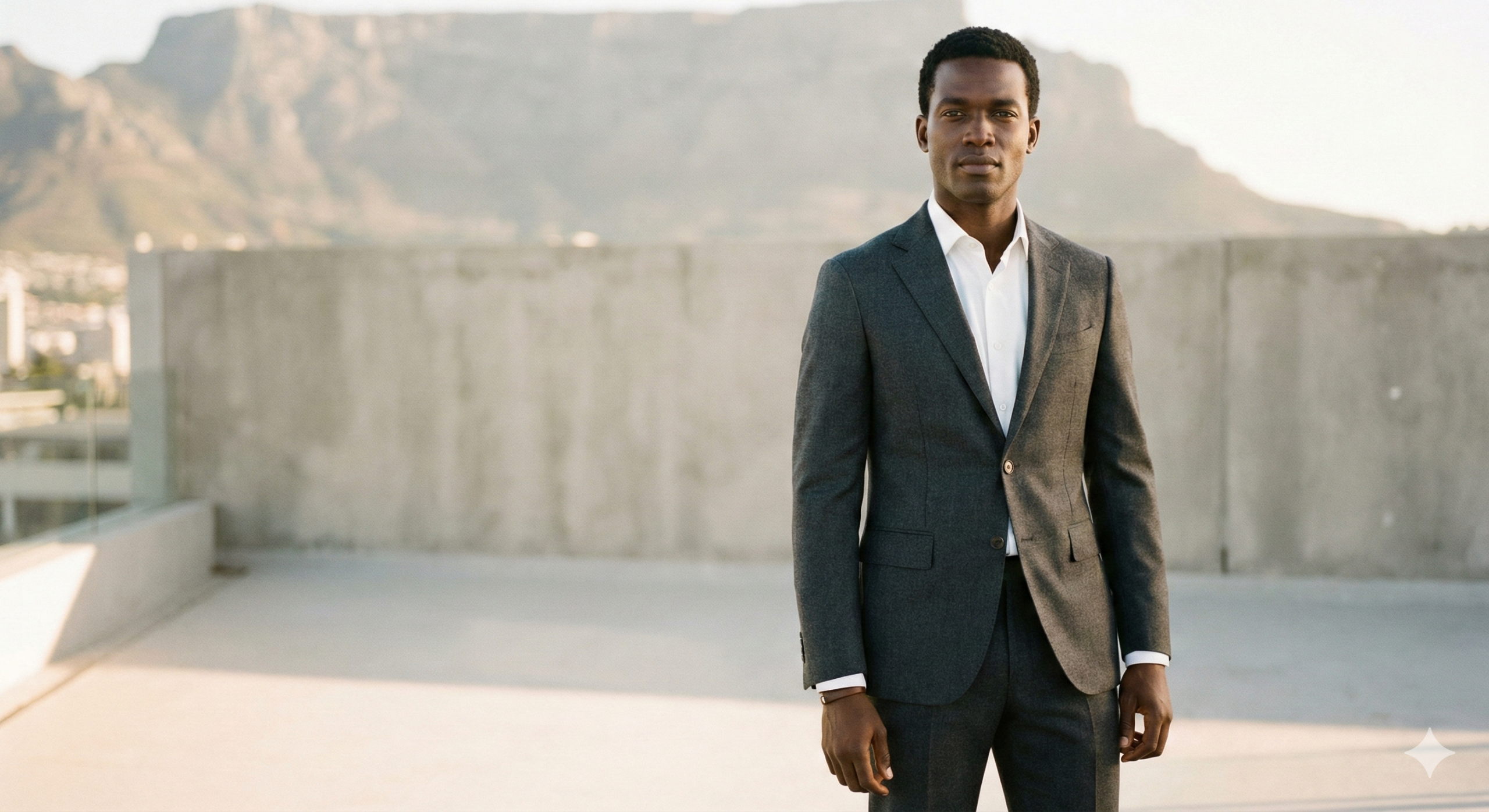
A lot of buyer regret comes from buying a version of yourself you don’t live as.
Try this: picture the next ten times you’ll wear it. Name them. If you can’t, pause.
Better approach:
Build around your actual week: work, social, travel, family events, and downtime
Choose pieces that can shift with styling: shoe changes, layering, accessories
Invest in the “in-between” garments you wear constantly
This is where Cape Town designer clothing can be a major advantage. Local design often respects real-life movement and repeat wear.
Cape Town light is not forgiving. It’s beautiful, but it shows everything.
In strong daylight:
some blacks look dusty
some whites look harsh
some beige tones look flat
some bright colors feel louder than expected
Do a simple test. View the piece in natural light if possible. Walk near a window. Look at how the color sits next to your skin. Luxury is partly about harmony.
The real luxury is consistency over time.
Ask:
Will the brand still stand by their standards next year?
Is sizing consistent across pieces?
Is finishing consistent across categories?
Does the design philosophy make sense, or does it change randomly?
Consistency is what lets you build a wardrobe, not a pile of one-off purchases.
If you like deeper education on how this works, our blog breaks down fabrics, fit, and wardrobe building in a practical way. Start here: read detailed insights on our fashion blog.
Even smart buyers make predictable mistakes. These are the ones that show up again and again in premium fashion boutiques Cape Town.
Overpaying for branding instead of build: a logo won’t fix poor construction.
Ignoring fabric performance: a gorgeous fabric that wrinkles instantly becomes a burden.
Skipping the movement test: fit that only works while standing still is not fit.
Buying without wardrobe context: a piece that can’t pair with what you own becomes “special occasion only,” then disappears.
Luxury looks different depending on how you live. A few grounded directions:
Tailored jacket with soft structure
Trousers with clean drape and minimal pulling
Shirts that hold shape at the collar and cuffs
Neutral colors that stay crisp in daylight
Elevated separates you can re-style
Fabrics with movement and texture
Pieces that photograph well without relying on shine
Comfort-first shoes paired with refined lines
Wrinkle-resistant wools and blends
Layering pieces with good recovery
Jackets that pack without losing shape
Dresses and sets that shift from day to night with minimal effort
All of this sounds obvious, but it’s the difference between buying luxury and living in it.
Once you understand what matters, decision-making gets calmer. You stop chasing the “best” and start choosing what’s right.
Informed buyers tend to evaluate through three lenses:
Craftsmanship: materials, construction, finishing, and fit logic
Philosophy: does the design serve a real life and a coherent wardrobe?
Trust signals: clarity, consistency, and an honest customer experience
This is why craftsmanship and philosophy often matter more than logos. Logos can be rented through trends. Craft and philosophy can’t be faked for long.
Logos can feel like certainty, especially when you’re busy or new to luxury shopping. But longevity comes from:
fabric that ages well
construction that holds form
tailoring that supports movement
finishing that stays clean
A wardrobe built on those elements looks current even when trends change because it’s grounded in proportion and quality.
Cape Town luxury integrates beautifully into a global wardrobe because it tends to be versatile and refined. The pieces often travel well across cities because they’re not built on loud seasonal statements.
If you split your time between different climates or you travel often, prioritize:
breathable wools
structured-but-light jackets
timeless cuts with modern finishing
colors that layer easily
That way, your wardrobe feels coherent whether you’re dressing in South Africa, London, Dubai, or New York.
A well-made garment changes how you move through a room. Not because it shouts. Because it removes friction. The collar sits right, so you stop adjusting it. The waistband holds comfortably, so you stop thinking about it. The sleeve length is correct, so your hands look intentional when you gesture.
That’s the real point. Luxury is mental ease, created through physical precision.
If you want to explore pieces with that philosophy, start at the main site and move slowly. The goal is not to buy more. The goal is to buy better. Here’s the homepage: discover Daniel Dujaxco.
It usually means craft-led clothing built with strong materials, careful finishing, and fit that works for Cape Town’s lifestyle and climate shifts, not just runway looks.
Check fabric behavior, inside construction, seam work, and finishing details like buttonholes and hems. Luxury should also feel comfortable after hours of wear, not only during a quick try-on.
It can be, especially if you struggle with fit or you want garments that last. Tailoring helps achieve balance in shoulders, waist, and length, which is often what makes clothing look “expensive” without obvious branding.
Look for transparency about materials and construction, willingness to alter garments, consistent finishing across products, and staff who speak about fit and fabric performance rather than hype.
Lightweight wool, high-quality cotton, linen blends with good recovery, and breathable linings tend to work well. Avoid fabrics that crease aggressively or lose shape quickly.
Buying for a fantasy occasion, prioritizing labels over construction, skipping movement tests in the fitting room, and choosing colors without checking them in natural light.
Start with versatile foundations: one excellent jacket, one pair of trousers with clean drape, one elevated shirt, and one piece that can shift from day to night. Add slowly, choosing consistency over variety.
Reputable fashion education often comes from established publications and textile authorities like Vogue, The Business of Fashion, and textile resources such as The Woolmark Company. For a brand-specific approach, you can also read detailed insights on our fashion blog.
If you’re shopping in Cape Town, take your time. Touch the fabric. Check the inside. Move in the garment. Ask about alterations. Look for consistency. Those small habits are what turn luxury fashion Cape Town into purchases you’ll still love years from now.


There are no comments